Global media Update tech Update & Automobile Life Style & Entertainment

Patnaites............. the people of Patna
Patnaites............. the people of Patna

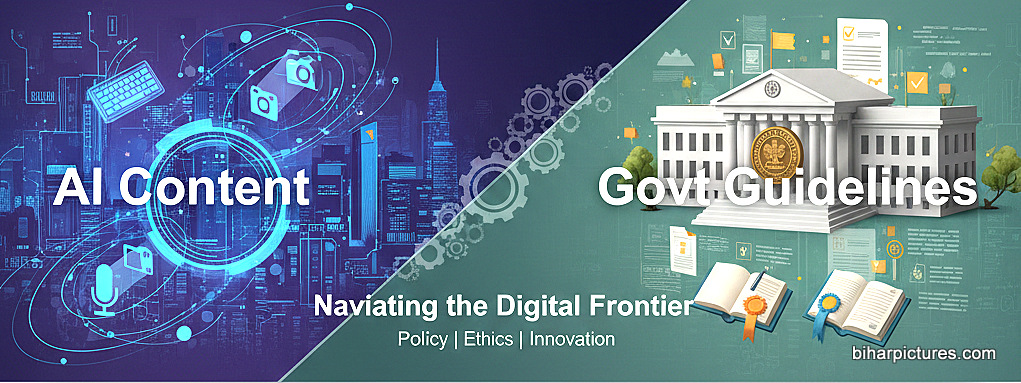
In a major step toward strengthening digital transparency and regulating artificial intelligence, the Government of India has announced new rules for AI-generated content on social media platforms. Under the new regulations, any photo, video, or audio created using artificial intelligence (AI tools) must carry a clear and visible label stating that it is AI-generated. These new AI content rules in India will come into effect from February 20, 2026.
Social media companies have been given a deadline until February 20 to comply with the guidelines. The move is aimed at controlling deepfake videos, fake AI content, misinformation, and misleading digital media that have been spreading rapidly across platforms.
 Amazon: दुनिया का सबसे बड़ा ऑनलाइन शॉपिंग प्लेटफॉर्म, जहां आपको बेहतरीन डील्स और विश्वसनीय प्रोडक्ट्स मिलते

As per the new government guidelines on AI-generated content, all content created or significantly modified using generative AI tools must be properly labeled. This includes AI-generated images, AI videos, AI-edited reels, synthetic voice recordings, and deepfake content.
The label must be clearly visible to users at the time of viewing. It cannot be hidden in metadata or buried in the description section. The objective is to ensure transparency in AI content and help users easily distinguish between real and artificially created media.
With the rapid rise of generative AI platforms such as text-to-image generators, voice cloning tools, and AI video editors, it has become increasingly difficult to identify authentic content. The government believes mandatory AI labeling will protect users from being misled.
One of the most important aspects of the new AI regulation in India is that social media platforms cannot rely only on user declarations. Previously, platforms depended mainly on creators to disclose whether their content was AI-generated.
Now, companies must implement technical AI detection systems to verify whether uploaded content has been generated or manipulated using AI. This includes using watermark detection tools, AI fingerprinting systems, metadata analysis, and machine-learning-based AI detection technology.
If a user falsely claims that their video or image is not AI-generated, the platform will be responsible for failing to detect it. This marks a significant shift in social media compliance laws in India.
To tackle the growing threat of deepfake videos and fake AI news, the government has introduced a strict removal timeline. Any misleading AI-generated content, illegal synthetic media, or harmful deepfake must be removed within three hours of being flagged.
This three-hour takedown rule aims to prevent viral misinformation, especially during elections, communal tensions, or emergency situations. Deepfake videos impersonating public figures, celebrities, or government officials will face strict scrutiny.
Officials have made it clear that there will be zero tolerance for malicious AI use. Platforms failing to comply with the rapid removal rule may face penalties under digital media regulations.
The new AI content policy in India will significantly change how platforms like Instagram, YouTube, and Facebook operate.
Currently, AI-generated content often circulates without any clear identification. Many users cannot tell whether a viral video is real or AI-made. With the new guidelines:
This means social media compliance in India will become more stringent, and companies will need to invest heavily in AI moderation tools.
Artificial intelligence has transformed content creation. From AI art generators to voice cloning technology, users can now produce highly realistic digital media within minutes. However, this technological progress has also led to serious concerns about fake news, online fraud, digital impersonation, and misinformation campaigns.
Deepfake technology, in particular, has become a global challenge. AI-powered tools can create realistic videos of individuals saying or doing things they never actually did. Such content has been used for political manipulation, financial scams, harassment, and character assassination.
By introducing these AI laws in India, the government aims to protect digital integrity while ensuring responsible AI use.
Despite the strict regulations, officials have clarified that the goal is not to restrict AI innovation. Artificial intelligence continues to drive growth in digital marketing, filmmaking, education, e-commerce, and content creation industries.
The new rules aim to promote responsible AI usage while preventing misuse. Transparent AI labeling may also help build user trust in ethical AI applications.
Experts believe that clear disclosure norms can encourage accountability without discouraging creators who use AI tools legitimately.
All social media companies operating in India must implement these AI compliance rules before February 20, 2026. After this date, strict monitoring and enforcement will begin.
Industry stakeholders are expected to hold consultations with regulators to finalize technical standards for AI detection and labeling systems.
Users may soon notice:
The introduction of mandatory AI labeling rules marks a turning point in India’s digital governance framework. As AI-generated media becomes more advanced and widespread, transparency will play a crucial role in maintaining trust in online spaces.
By enforcing visible AI labels, technical verification systems, and rapid takedown policies, the government aims to create a safer digital ecosystem. The fight against deepfake content, AI misinformation, and fake digital media is now entering a more regulated phase.
As February 20, 2026 approaches, social media platforms, content creators, and users alike must prepare for a new era of AI regulation in India — one where accountability, transparency, and digital responsibility take center stage.