1. Introduction: The Shadow Over Bihar’s Education Hub
The soaring aspirations of Bihar’s youth, particularly those from semi-urban districts seeking professional futures in medicine and engineering, have long driven a migration to the state capital, Patna. This demographic shift has created a sprawling, often unregulated economy of private hostels, coaching centers, and mess facilities, concentrated in areas like Chitragupta Nagar. It is within this ecosystem that a tragedy unfolded in January 2026, shaking the collective conscience of the state and exposing deep fissures in the administrative, legal, and social safety nets designed to protect students.
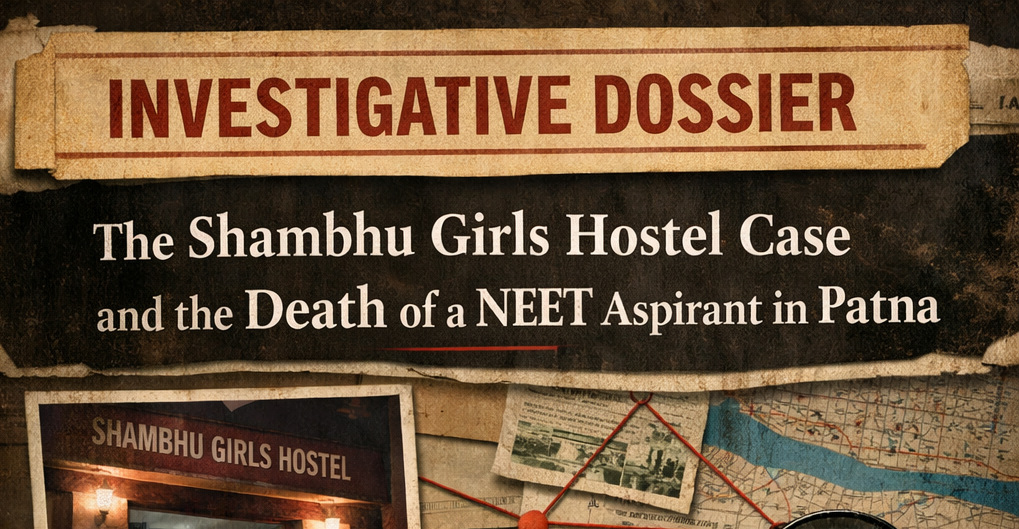
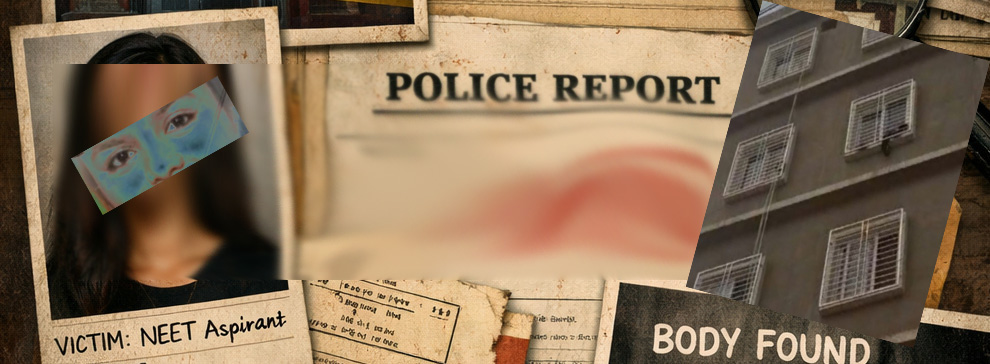
The case concerns the suspicious death of an 18-year-old NEET (National Eligibility-cum-Entrance Test) aspirant, a resident of Jehanabad, who died under harrowing circumstances at the Shambhu Girls Hostel in Patna. What began as a police procedural categorized as a suicide due to academic pressure has metamorphosed into a high-stakes criminal investigation involving allegations of gang rape, brutal physical assault, destruction of evidence, and administrative cover-ups.1 The trajectory of this case—from the initial dismissal of the family’s concerns to the eventual formation of a Special Investigation Team (SIT) monitored by the Inspector General (IG)—offers a grim case study into the challenges of law enforcement in Bihar and the vulnerability of female students in the state’s capital.2
This report provides an exhaustive reconstruction of the events, a forensic analysis of the conflicting medical evidence, a critique of the investigative timeline, and an assessment of the socio-political firestorm that has engulfed the Nitish Kumar-led government. By synthesizing details from police FIRs, post-mortem findings, political statements, and family testimonies, this document aims to serve as a comprehensive record of the “Shambhu Girls Hostel Case” as it stands today.
2. Profile of the Victim and the Setting
To understand the gravity of the incident, one must first contextualize the victim’s profile and the environment in which she lived. The deceased was not merely a statistic but a representative of a specific demographic: the ambitious, middle-class student form Bihar’s hinterlands.
2.1 The Aspirant from Jehanabad
The victim, an 18-year-old female, hailed from the Jehanabad district of Bihar, a region historically known for its political volatility but increasingly recognized for its youth’s academic drive.5 She had previously appeared for the medical entrance examination and had successfully qualified for a Bachelor of Dental Surgery (BDS) course. However, driven by the ambition to secure an MBBS seat—a common aspiration in the highly competitive Indian medical education landscape—she chose not to enroll in the dental program. Instead, she returned to Patna to prepare for a second attempt at NEET, aiming to improve her rank.3
This detail is crucial for the psychological autopsy of the case. The police initially leveraged this “repeat year” scenario to construct a narrative of academic pressure and depression, a common trope used to explain student suicides in coaching hubs like Kota and Patna. However, family members and acquaintances described her as determined rather than despondent, complicating the “suicide due to failure” theory.7
2.2 The Shambhu Girls Hostel
The crime scene is the Shambhu Girls Hostel, located in the Chitragupta Nagar area of Patna. This locality is densely packed with student accommodations, catering to the thousands who flock to the capital for coaching.2
Infrastructure: The hostel is a four-story building. The victim occupied a single-occupancy room on the third floor.
Security: The building was reportedly equipped with CCTV cameras covering the lobby and common areas. The single entry gate was typically locked from the inside, a security measure that would later become a focal point of the “locked room” investigation.4
Management: The hostel was owned and managed by Manish Kumar Ranjan, who resided on the premises. His presence in the building at the time of the incident has made him a primary suspect in the subsequent investigation.4
The hostel represents the unregulated “grey zone” of student housing in Patna, where safety protocols are often ad-hoc, and the relationship between wardens/owners and student tenants can lack professional boundaries.
3. The Critical Timeline: January 5 – January 11, 2026
The investigation by the SIT has hinged on a precise reconstruction of the timeline, specifically the victim’s movements on January 5, 2026. The police have deployed technical surveillance to map her journey from Jehanabad to Patna, seeking to identify any window where an external assault could have occurred.
3.1 The Journey from Jehanabad (January 5)
The victim had gone home to Jehanabad for a break and returned to Patna on January 5, 2026.
Departure: She boarded a train from Jehanabad.
Arrival at Patna Junction: CCTV footage from the railway station confirms her arrival at Patna Junction at 3:05 PM on January 5.8
The “14-Minute” Commute: One of the most scrutinized aspects of the investigation is the journey from the railway station to the hostel. Police analysis confirms that she reached the Shambhu Girls Hostel at 3:19 PM, exactly 14 minutes after being seen at the station.10
Investigative Significance: This short duration suggests a direct transit without unscheduled stops. It significantly narrows the window of opportunity for any crime to have occurred en route. If she was assaulted, the timeline strongly suggests the location was either her home in Jehanabad (prior to departure) or, more likely, inside the hostel after her arrival.8
Upon reaching the hostel, the student reportedly entered her room on the third floor.
Surveillance: The hostel’s CCTV cameras recorded her entry. According to initial police reports, she remained “largely in her room” after arrival. The cameras did not capture any “suspicious activity” in the corridors, and no outsiders were seen entering her specific room on the footage reviewed initially.4
The Last Contact: She did not appear for dinner that evening. This absence was arguably the first red flag, though it appears to have been overlooked by the hostel management at the time.4
3.3 The Discovery (January 6 Morning)
The situation escalated on the morning of January 6.
Missed Breakfast: When the student failed to appear for breakfast, the hostel staff became alarmed.
Forced Entry: The hostel warden and staff went to her room. They found the door locked from the inside. Upon breaking the lock (or forcing the door open), they discovered the student in an unconscious state.4
Initial Condition: She was alive but unresponsive. The room reportedly contained strips of sleeping pills, a detail that would immediately bias the initial police response toward a suicide hypothesis.4
3.4 Medical Treatment and Death
Prabhat Hospital (First Admission): She was rushed to a nearby private facility, identified in reports as Prabhat Hospital (or a similar private entity in the vicinity). Here, she was treated for suspected poisoning/overdose. Crucially, a gynecologist at this facility examined her and recorded—under the e-Sakshya system—that there were “no signs of sexual violence”.11
Medanta Hospital (Referral): As her condition deteriorated and she slipped into a deep coma, the family shifted her to the Jai Prabha Medanta Hospital for advanced critical care.
The Demise: Despite medical intervention, the student passed away on January 11, 2026, five days after being found. Her death transformed the case from a medical emergency into a homicide investigation.3
Table 1: Comprehensive Event Timeline
Date
Time
Event
Key Witness/Evidence
Jan 5
Afternoon
Departed Jehanabad for Patna.
Family testimony
Jan 5
03:05 PM
Arrived at Patna Junction Railway Station.
Station CCTV 10
Jan 5
03:19 PM
Arrived at Shambhu Girls Hostel (14 min transit).
Hostel CCTV 10
Jan 5
Evening
Did not appear for dinner.
Hostel Warden 4
Jan 6
Morning
Failed to appear for breakfast; Room accessed forcefully.
Hostel Staff 4
Jan 6
Morning
Admitted to Private Hospital (Prabhat/).
Hospital Records 2
Jan 6-10
–
Treated for suspected poisoning; Gynecologist rules out assault.
Medical Records 11
Jan 9
–
FIR registered by father alleging rape/murder.
Police FIR 8
Jan 11
–
Victim declared dead at Medanta Hospital.
Death Certificate 3
Jan 12
–
Protests at Kargil Chowk; Lathi charge by police.
Media Reports 9
Jan 14
–
Post-Mortem Report released (Confirms assault signs).
PMCH Report 8
Jan 16
–
SIT Formed; Hostel Owner Arrested.
Police HQ 3
4. The Forensic Dichotomy: Suicide vs. Brutal Assault
The core controversy of the Shambhu Girls Hostel case lies in the irreconcilable differences between the initial police/medical findings and the subsequent post-mortem report. This discrepancy suggests either gross incompetence, a deliberate cover-up, or a complex crime scene involving staged evidence.
4.1 The Initial Hypothesis: Suicide by Overdose
For the first week (Jan 6 to Jan 13), the narrative was dominated by the theory of self-harm.
Toxicology Evidence: Police sources cited a urine analysis conducted during her hospitalization that detected the presence of sleeping pills. Furthermore, investigators claimed to have recovered three strips of sleeping pills from her room.4
Digital Footprint: A forensic examination of her mobile phone allegedly revealed a search history dating back to December 24. Search terms included “poison,” “sleeping pills overdose,” and methods of suicide. Police used this to argue premeditation, suggesting she was suffering from depression or academic anxiety.7
The Gynecologist’s Clearance: Perhaps the most damaging piece of evidence against the family’s rape allegation was the initial medical report. A gynecologist at the private hospital explicitly stated there were no external or internal signs of sexual assault. This statement was recorded digitally, lending it procedural weight.3
4.2 The Post-Mortem Revelation: Evidence of Struggle
The release of the post-mortem report by a medical board at Patna Medical College and Hospital (PMCH) on January 14 shattered the suicide theory. The autopsy painted a picture of a violent, prolonged struggle that contradicted the “passive overdose” narrative.
Injury Count: The report documented 10 distinct injury marks on the body.2
Crescentic Nail Abrasions: The most chilling finding was the presence of “crescentic nail abrasions” (deep fingernail gouges) on her chest, neck, and shoulders. In forensic pathology, these are classic defensive wounds or marks left by an attacker trying to pin a victim down. They indicate the victim was conscious and fighting back.1
Blunt Force Trauma: The report noted “blue marks” (severe bruising) on her back. Experts interpret this as the result of being pressed forcefully against a hard surface (like a floor or wall) for an extended period, consistent with a sexual assault scenario.1
Sexual Violence Confirmed: Directly contradicting the private hospital’s gynecologist, the PMCH autopsy found severe injuries to the private parts, including “internal tissue damage” and “bleeding,” stating unequivocally that “sexual violence cannot be ruled out” and noting signs of “forceful penetration”.1
Duration of Struggle: Forensic analysis suggested the victim fought for her life for approximately 1.5 to 2 hours. This duration is inconsistent with a rapid loss of consciousness from sleeping pills, suggesting the ingestion of pills might have been forced or occurred after the assault.1
The conflict between the two medical opinions has raised serious questions about the integrity of the initial treatment.
Possibility of Collusion: The victim’s family has accused the doctor at the private hospital of being compromised, possibly by the hostel owner or other influential figures, to suppress evidence of rape.2
Forensic Incompetence: Alternatively, the initial examination might have been superficial, focusing solely on the “poisoning” aspect to save her life, thereby missing the traumatic injuries. However, the presence of visible nail marks on the chest makes this explanation less plausible.
Staged Scene: The presence of sleeping pills in the room and the Google search history could be interpreted as a “staged suicide” by the perpetrators to cover up a rape-murder. If the victim was forced to search for these terms or if the phone was manipulated, the digital evidence becomes part of the crime rather than proof of intent.4
5. The Investigation: From Apathy to Action
The police response followed a trajectory common in high-profile cases in India: initial lethargy and dismissal, followed by hyper-activity once political and public pressure mounted.
5.1 Phase I: Denial and Delay (Jan 6 – Jan 13)
The victim’s family, led by her father and maternal uncle, faced significant hurdles in the early days.
Refusal to File FIR: The family alleged that the Chitragupta Nagar police were reluctant to register a case of rape. They claimed that the Station House Officer (SHO) and the Investigating Officer (IO) tried to dissuade them, with the mother alleging that officers told her justice would take “15 years” and she should consider a “compromise”.6
Bribery Allegations: The family reported receiving offers of ₹10 lakh from the hostel management to “manage” the case and withdraw the allegations. This suggests an attempt to buy silence before the post-mortem results became public.9
The Lathi Charge: On January 12, when the family and students protested at Kargil Chowk with the victim’s body, the police response was punitive. Officers resorted to a lathi charge (baton charge) to disperse the crowd, a move that drew widespread condemnation and highlighted the administration’s insensitivity.9
5.2 Phase II: The SIT Takeover (Jan 14 Onwards)
Following the explosive post-mortem findings, the Bihar Police leadership initiated damage control measures.
Formation of SIT: Director General of Police (DGP) Vinay Kumar ordered the constitution of a Special Investigation Team (SIT). The team is headed by the City SP (East) and includes two Deputy Superintendents of Police (DSPs), two Inspectors, and female officers to ensure sensitivity.2
High-Level Monitoring:Patna Range IG Jitendra Rana was tasked with personally monitoring the investigation. He receives daily updates and has visited the crime scene along with ADG (Weaker Section) Amit Kumar Jain.2
The “Jehanabad Team”: Recognizing that the victim had just returned from home, a dedicated police team was sent to Jehanabad to interview her local contacts, track her movements during her holidays (Dec 26–Jan 5), and investigate if she was under any prior threat. This line of inquiry aims to determine if the assault was the culmination of harassment that began in her hometown.8
5.3 Arrests and Suspects
Manish Kumar Ranjan (Hostel Owner): The police arrested the hostel owner, Manish Kumar Ranjan, shortly after the post-mortem report. While the City SP stated that his direct participation was not yet proven, his arrest was justified to “prevent tampering with evidence.” His presence in the building at the time of the incident and the “locked gate” scenario place him under heavy suspicion.8
The “Uncle” Investigation: There are murky details regarding the “uncle” figure. Some reports mention the sleeping pills were handed to the victim’s “maternal uncle” by the warden. The police are verifying the identity of all male relatives and visitors who interacted with her.4
6. Socio-Political Fallout: A State in Turmoil
The death of the NEET aspirant has ceased to be a local crime story; it has become a lightning rod for political mobilization in Bihar, occurring in a pre-election or politically charged atmosphere.
6.1 Political Interventions
Prashant Kishor (Jan Suraaj): The founder of the Jan Suraaj Party, Prashant Kishor, took a proactive stance. He visited the victim’s family in Jehanabad and later met with Patna SSP Kartikeya Sharma. Kishor articulated a sharp critique of the police, questioning why they were in such a “haste” to declare the death a suicide. He demanded departmental action against the officers who allegedly intimidated the mother and emphasized that the family wanted justice, not compensation.6
The Left and RJD: The Communist Party of India (Marxist-Leninist) Liberation [CPI(ML)] and the Rashtriya Janata Dal (RJD) have mobilized their cadres. CPI(ML) State Secretary Kunal accused the police of being “in the dock” for covering up the crime. The opposition has framed this incident as indicative of the collapse of law and order under the Nitish Kumar regime, specifically regarding women’s safety.2
Pappu Yadav: The Independent MP Pappu Yadav, known for his on-ground activism, visited the hospital at midnight, ensuring the case remained in the media spotlight and putting pressure on the hospital administration.2
Patna, often called the “Kota of the East,” houses lakhs of students. This incident has terrified the student community. Protests have erupted at Kargil Chowk and near the Income Tax Golambar. The students’ demands have expanded beyond justice for the victim to include:
Regulation of private hostels.
Mandatory background checks for hostel staff.
Strict enforcement of CCTV protocols.
An end to the “moral policing” and dismissal of student complaints by police.8
7. Legal Analysis: Charges and Challenges
The transition of the case from an unnatural death to a heinous crime involves complex legal maneuvers.
7.1 The Shift in Charges
Initially registered under sections related to suicide or accidental death, the FIR has likely been altered or is in the process of being altered to include:
Section 103 (1) of BNS (Murder): Given the violent struggle and subsequent death.
Section 64 of BNS (Rape): Based on the post-mortem confirmation of sexual violence.
Section 66 (Punishment for causing death or resulting in persistent vegetative state): Relevant given her coma prior to death.
Section 238 (Causing disappearance of evidence): Against the hostel management for potential tampering with the crime scene or CCTV data.
7.2 The “Locked Room” Defense vs. Prosecution
The defense counsel for the accused (likely the hostel owner) will undoubtedly rely on the “locked room” aspect. If the door was forced open from the inside, how could an intruder have exited?
Prosecution Strategy: The SIT will need to prove via forensic analysis of the lock whether it was truly locked from the inside or if it was manipulated (e.g., a latch that can be engaged from outside via a window, or if the “locked” claim by the hostel staff is a fabrication to protect the owner). The “grill window” mentioned in reports was deemed too small for entry, which deepens the mystery.4
The Digital Alibi: The defense will also leverage the “Google Search History” for poison to argue suicidal intent. The prosecution must prove this was either staged or irrelevant to the physical injuries found.11
8. Conclusion: The Road to Justice
The Shambhu Girls Hostel case stands as a grim indictment of the safety infrastructure for women in Patna. A young student, returning to the city with dreams of a medical career, was subjected to a brutal assault that authorities initially tried to erase with a label of “suicide.”
As of mid-January 2026, the investigation is at a critical juncture. The SIT, under the gaze of the IG and the pressure of the opposition, must bridge the gap between the “locked room” puzzle and the “crescentic nail marks” on the victim’s body. The pending viscera report from the Forensic Science Laboratory (FSL) will be the final piece of the puzzle, confirming whether the sleeping pills were the primary cause of death or merely a tool of subjugation.
For the family in Jehanabad, the battle is two-fold: grieving the loss of a daughter and fighting a system that allegedly told them justice would take 15 years. The outcome of this case will determine whether that timeline can be shortened, and whether the “Shambhu Girls Hostel” becomes a catalyst for systemic reform in Bihar’s education sector.
Key Unresolved Questions for the SIT:
The 14-Minute Gap: Did she meet anyone between the station and the hostel?
The Lock: Was the door genuinely locked from the inside, or is this a narrative planted by the first responders (hostel staff)?
The Pills: Were the sleeping pills self-administered, forced, or planted?
The First Doctor: Why did the initial gynecologist rule out assault when injuries were so severe? Was there coercion?
The answers to these questions will decide if this case ends in a conviction or becomes another cold file in Bihar’s police archives.
Established in 2008, Patnaites.com was founded with a mission to keep Patnaites (the people of Patna) well-informed about the city and globe.
At Patnaites.com, we cater Hyperlocal Coverage to Global and viral news and views.ensuring that you are up-to-date with everything from sports events to campus activities, stage performances, dance and drama shows, exhibitions, and the rich cultural tapestry that makes Patna unique.
Patnaites.com brings you news from around the globe, including global events, tech developments, lifestyle insights, and entertainment news.
Established in 2008, Patnaites.com was founded with a mission to keep Patnaites (the people of Patna) well-informed about the city and globe.
At Patnaites.com, we cater Hyperlocal Coverage to
Global and viral news and views. ensuring that you are up-to-date with everything from sports events to campus activities, stage performances, dance and drama shows, exhibitions, and the rich cultural tapestry that makes Patna unique.
Patnaites.com brings you news from around the globe, including global events, tech developments, lifestyle insights, and entertainment news.