Global media Update tech Update & Automobile Life Style & Entertainment

Patnaites............. the people of Patna
Patnaites............. the people of Patna

Patna, Bihar:
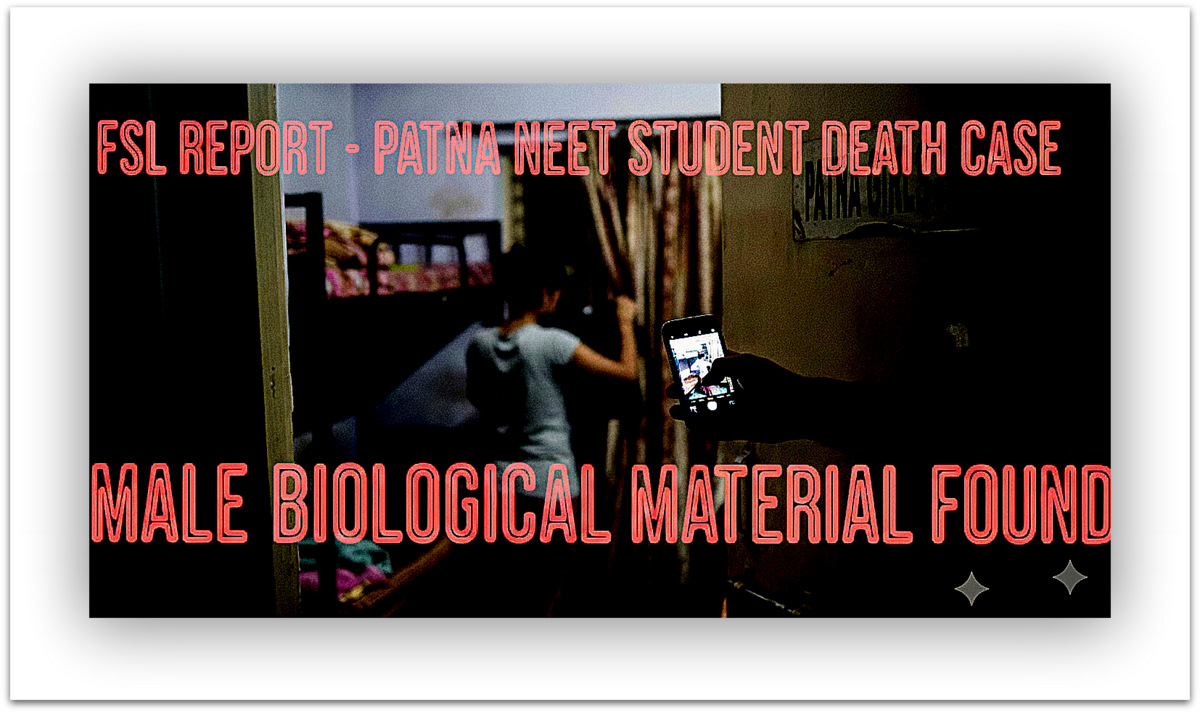
The investigation into the mysterious death of an 18-year-old NEET aspirant in Patna has taken a significant turn after the Forensic Science Laboratory (FSL) reportedly detected male biological material during forensic analysis. The latest development has intensified the probe and raised serious questions about the circumstances surrounding the student’s death.
According to sources associated with the investigation, the FSL’s biological examination found male sperm or male genetic material in samples collected from the scene of occurrence and the victim’s body. Investigators consider this finding a crucial forensic breakthrough, as it potentially alters the direction of the case. However, officials have clarified that the exact wording of the FSL report has not yet been officially released by either the police or forensic authorities.

The case pertains to a young woman from Jehanabad district, who was preparing for the National Eligibility-cum-Entrance Test (NEET) while residing in a coaching hostel in Patna. On January 6, she was found unconscious in her hostel room under suspicious circumstances. She was initially rushed to a hospital and later shifted to a private medical facility, where she succumbed after several days of treatment.
In the initial phase of the investigation, police officials suggested that the student may have attempted suicide by consuming sleeping pills. However, subsequent medical observations and forensic inputs began to challenge this theory, prompting calls for a deeper and more transparent investigation.
The post-mortem report conducted at Patna Medical College and Hospital (PMCH) documented injuries on the body and noted that the possibility of sexual assault could not be ruled out. These findings contradicted early police statements and triggered widespread public outrage, with civil society groups and political leaders demanding accountability.
The reported FSL findings have further strengthened suspicions of sexual violence, making the forensic evidence central to the case. Investigative agencies are now focusing on DNA profiling and matching biological samples with potential suspects. Sources indicate that individuals linked to the hostel and others who interacted with the victim during her final days may be examined as part of this process. Family members of the deceased are also expected to be asked for DNA samples to assist in comparisons.
A Special Investigation Team (SIT) constituted to probe the case has already submitted its preliminary findings to the Bihar Director General of Police (DGP). The SIT continues to record statements from hostel staff, medical personnel, students, and other relevant witnesses.
The case has sparked widespread concern across Bihar and beyond. Several political leaders, women’s rights activists, and student organizations have renewed their demand for a Central Bureau of Investigation (CBI) probe, citing inconsistencies in early claims and the gravity of emerging forensic evidence.
Meanwhile, medical experts involved in the extended review process, including specialists from AIIMS, have cautioned that incomplete documentation and gaps in medical records could complicate final conclusions. They have stressed the importance of procedural transparency and adherence to forensic protocols.
The victim’s family has expressed deep dissatisfaction with the pace of the investigation and continues to demand swift arrests and strict legal action against those responsible. As forensic scrutiny deepens, the case remains under close public and judicial watch, with further developments expected in the coming days.

Auto Amazon Links: No products found.